Alzheimer’s disease (AD) is a progressive neurodegenerative disorder and the most common cause of dementia, accounting for 60-80% of cases. It is characterised by the accumulation of amyloid-beta plaques and neurofibrillary tangles (tau protein) in the brain, leading to neuronal damage, synaptic loss, and brain atrophy.
Alzheimer’s disease faces significant challenges in early diagnosis, particularly during the stages of subjective cognitive decline (SCD) and mild cognitive impairment (MCI), where atypical symptoms are often overlooked. Blood-based biomarker testing, with its advantages of being non-invasive, convenient, and repeatable, offers a breakthrough solution for the early screening, diagnosis, and prognosis of AD.
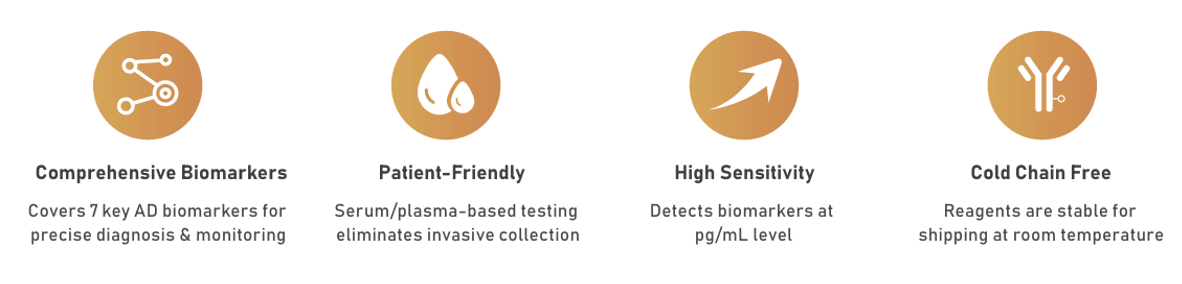
This CE certified kit is compatible with the BD FACSCanto™ II Clinical Flow Cytometry System, as well as other flow cytometers equipped with APC and PE fluorescence detection channels. After preparation, liquid reagents are stable for 1 month at 2-8°C, while reconstituted lyophilized reagents should be used within 12 hours.
Biomarker
Detection Significance
pTau217
Critical tau phosphorylation site in early AD, enabling detection of initial pathological changes and supporting early clinical intervention
pTau181
Effectively differentiates AD from other neurodegenerative disorders while serving as a progression biomarker to monitor disease advancement
Aβ1-42/Aβ1-40
Reflects cerebral amyloid deposition for risk stratification, pathological burden assessment, early screening, and anti-amyloid therapy evaluation
GFAP
Identifies neuroinflammatory status, assists in determining disease severity, and serves as a potential monitoring indicator
NFL
Monitors neuronal integrity for prognosis assessment and dynamic disease tracking
α-SYN
Evaluates synaptic dysfunction and supports differential diagnosis of neurodegenerative diseases